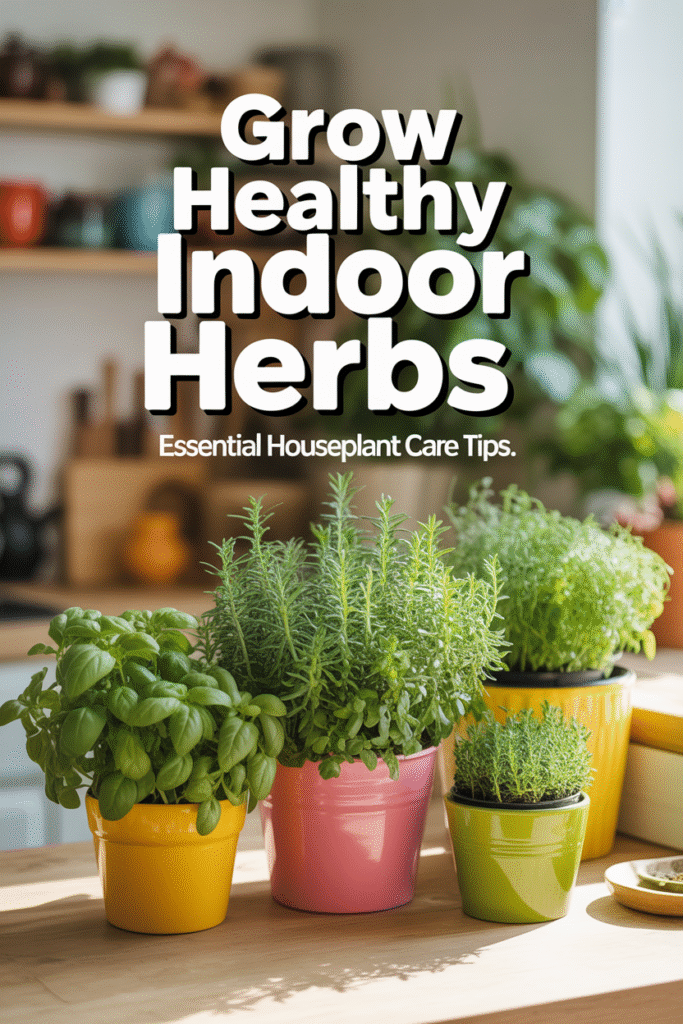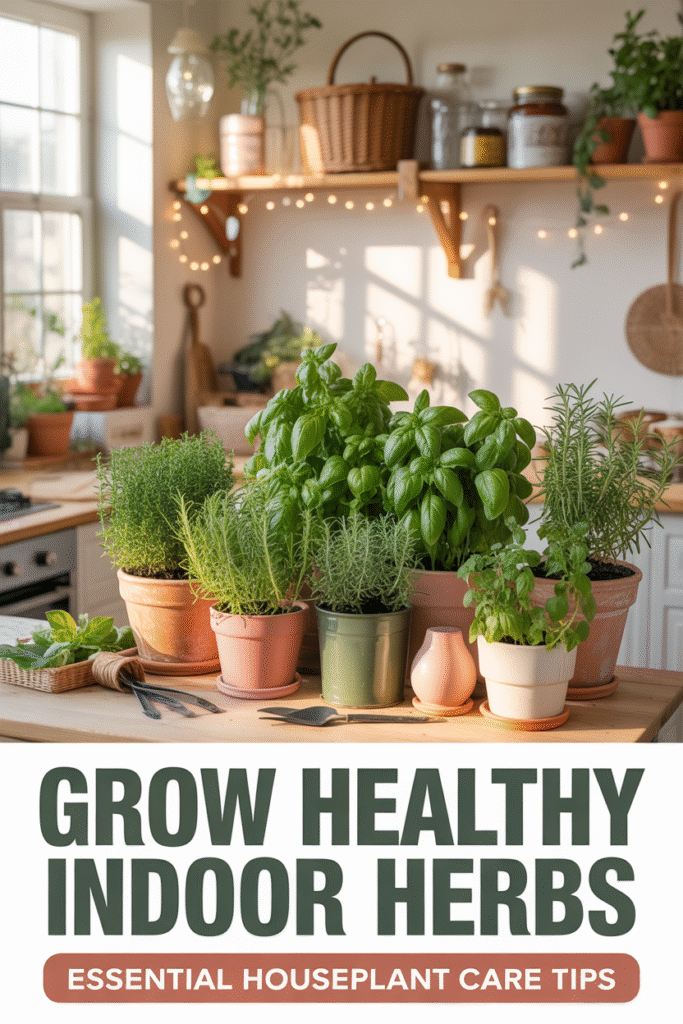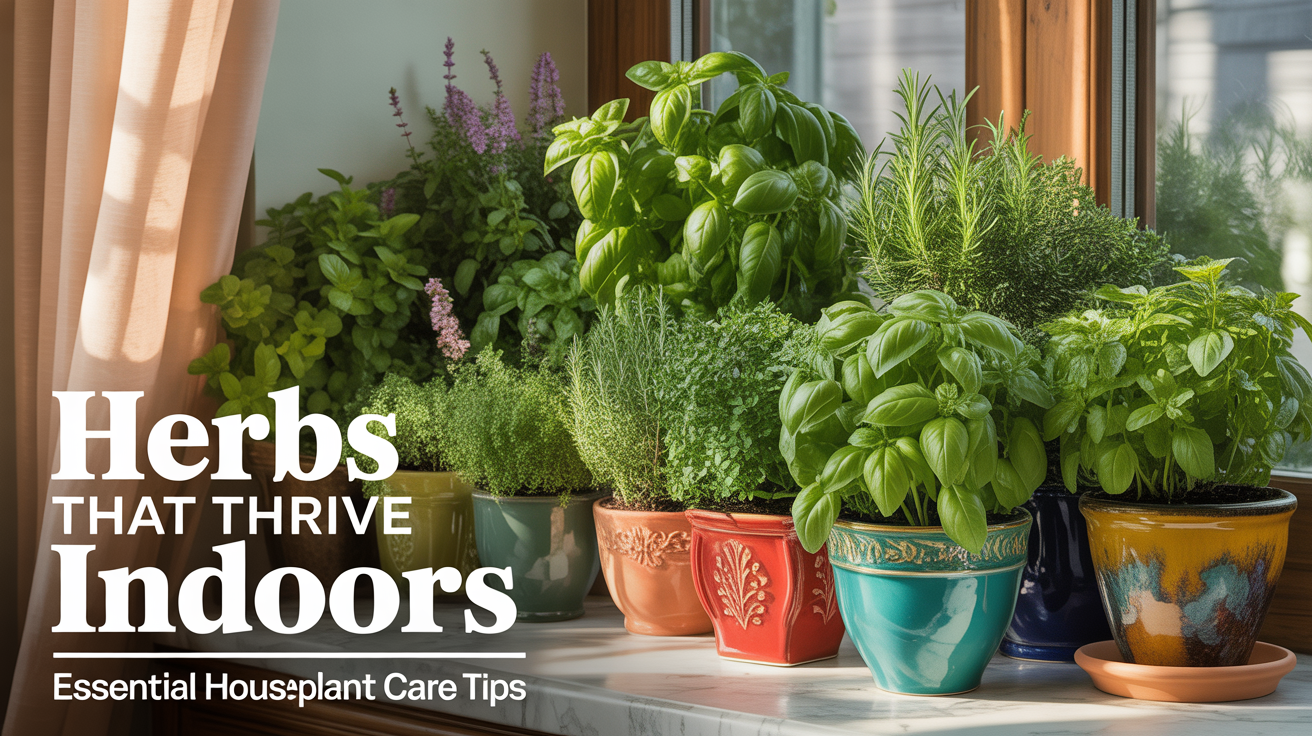
Growing herbs indoors is one of the easiest and most rewarding ways to bring fresh flavor, fragrance, and greenery into your home. Whether you’re planting basil on a sunny kitchen windowsill or keeping rosemary thriving on a small shelf, the key to long-lasting indoor herbs is understanding their basic needs—especially watering, light, and soil. With the right setup, even beginners can create a lush indoor herb garden that stays healthy all year round.
Herbs That Thrive Indoors | Essential Houseplant Care Tips for Healthy Growth
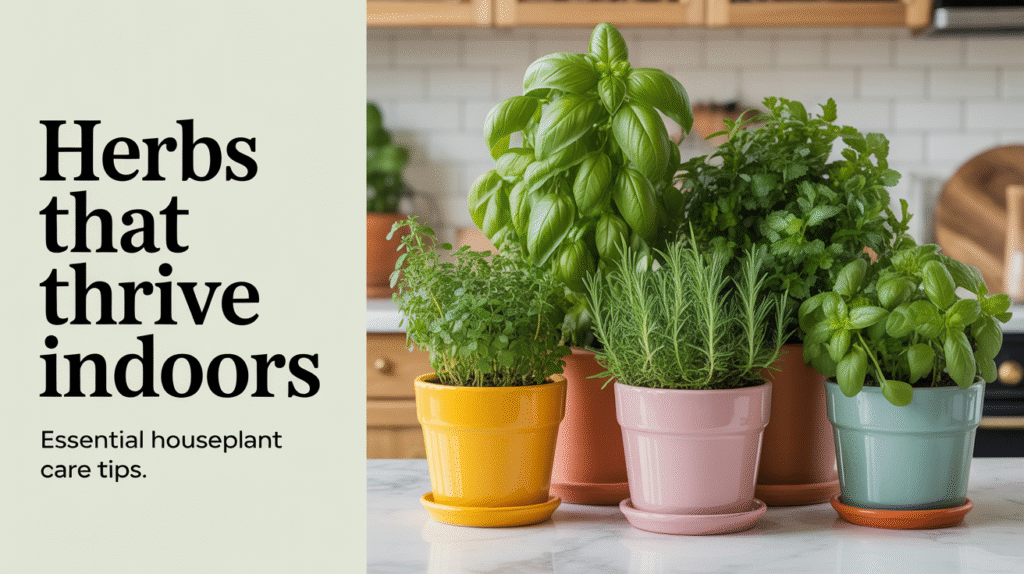
This guide is designed to simplify indoor herb care by focusing on practical, beginner-friendly techniques. From watering strategies to optimize plant growth, to choosing the best soil blend for moisture control, you’ll gain confidence with every step. These Essential Houseplant Care Tips will help you maintain strong roots, vibrant leaves, and herbs that continuously produce fresh, flavorful harvests.
Indoor herbs can transform any small corner into a functional mini-garden. Whether you’re a busy cook, a plant lover, or someone who simply wants easy greenery indoors, mastering these Essential Houseplant Care Tips ensures your herbs stay lush, productive, and thriving in any indoor environment.
1 — Choose Herbs That Naturally Thrive Indoors
Before planting your indoor herb garden, it’s important to select varieties that naturally adapt to indoor conditions. Some herbs, like basil, mint, parsley, thyme, chives, and oregano, flourish with moderate sunlight and regular watering—making them perfect for kitchen shelves and windowsills. These herbs not only grow easily indoors but also offer consistent leaves for cooking throughout the year.
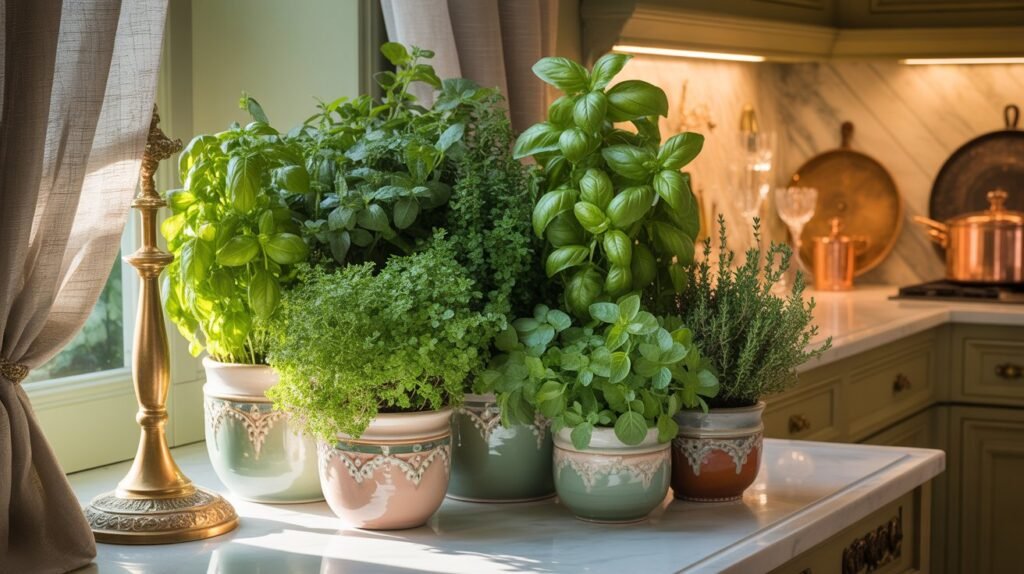
Selecting herbs that suit your home’s lighting makes care even easier. For example, mint tolerates lower light, while basil prefers brighter windows. When you choose herbs based on their natural preferences, you reduce plant stress and increase growth, making these Essential Houseplant Care Tips even more effective.
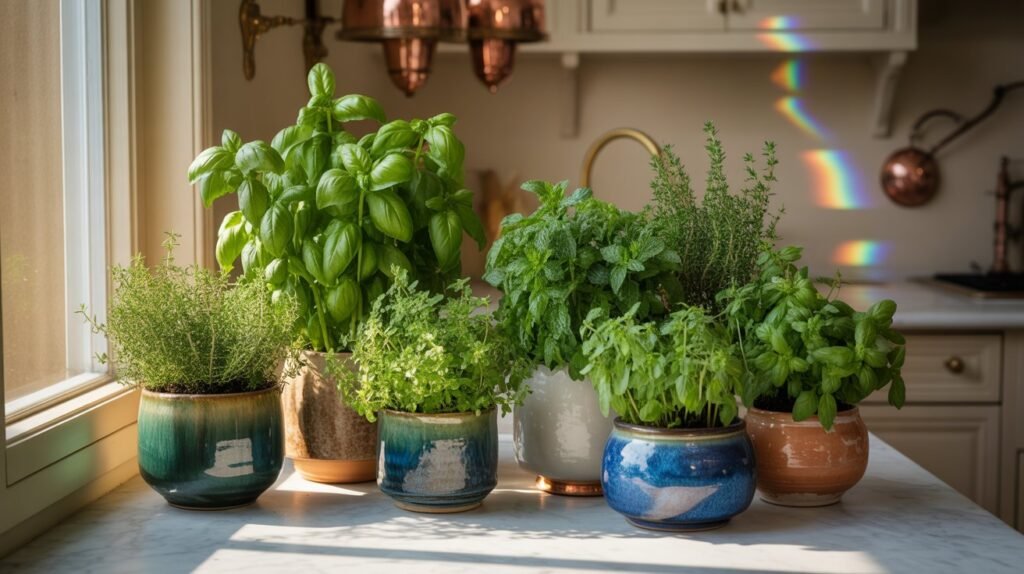
Indoor-friendly herbs grow compactly, smell amazing, and require fewer adjustments, so your gardening journey starts off simple and successful.
2 — Understand the Right Light Conditions for Indoor Herbs
Light is one of the most important factors in keeping indoor herbs healthy. Most common herbs—like basil, thyme, rosemary, and oregano—prefer bright, indirect sunlight for at least 4–6 hours a day. Placing them near a south- or east-facing window helps them receive steady light without getting scorched. When your herbs get the right amount of light, they grow fuller, greener, and more fragrant, making these Essential Houseplant Care Tips even more effective.
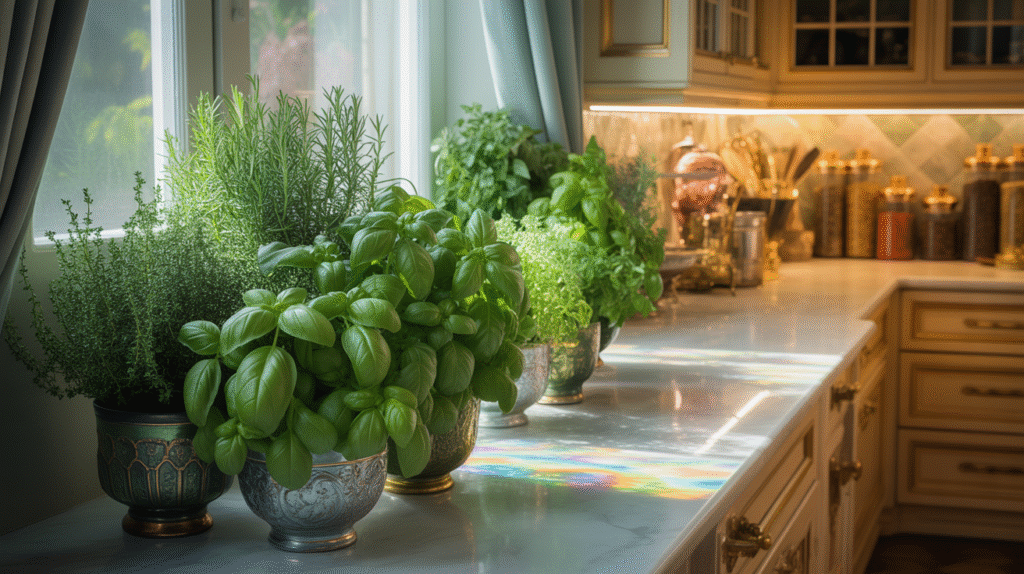
If your space doesn’t receive enough natural sunlight, don’t worry. Grow lights are a simple and powerful alternative. LED grow lights provide consistent brightness and mimic the sun’s spectrum, helping herbs thrive even in darker apartments or kitchens. This ensures your herbs stay productive year-round, regardless of the seasons.
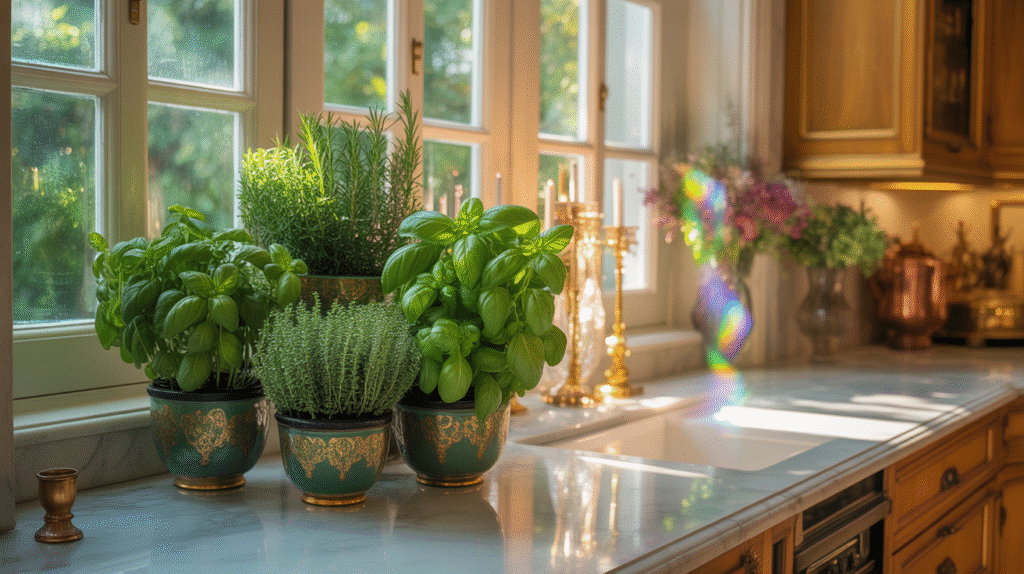
Monitoring leaf color helps you understand your plant’s light needs. Pale, leggy, or drooping leaves often signal low light, while crispy leaf edges may suggest too much direct sunlight. Adjusting light placement is a quick fix that keeps your herbs growing strong and thriving indoors.
3 — Water Your Herbs the Right Way
Watering indoor herbs may seem simple, but the right technique makes a huge difference in plant health. Most herbs prefer evenly moist soil—not soggy and not bone-dry. A good rule is to water when the top inch of soil feels dry to the touch. This prevents overwatering, which is one of the most common issues beginners face, and supports the success of your Essential Houseplant Care Tips.
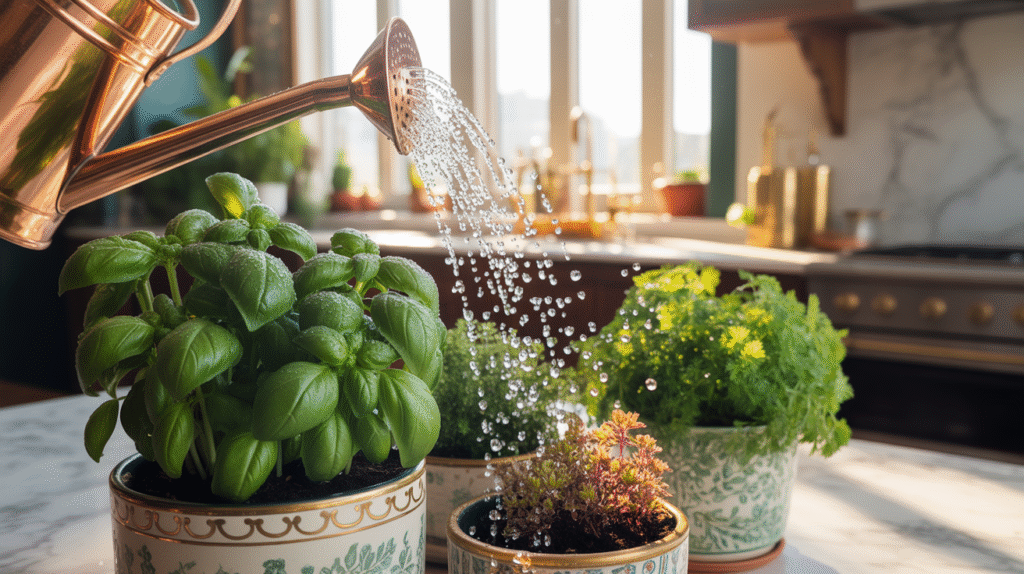
Using pots with drainage holes is essential because standing water can cause root rot, yellow leaves, and slow growth. When watering, allow the excess water to drain completely rather than letting the pot sit in a tray of water. This keeps the roots healthy and oxygen-rich.
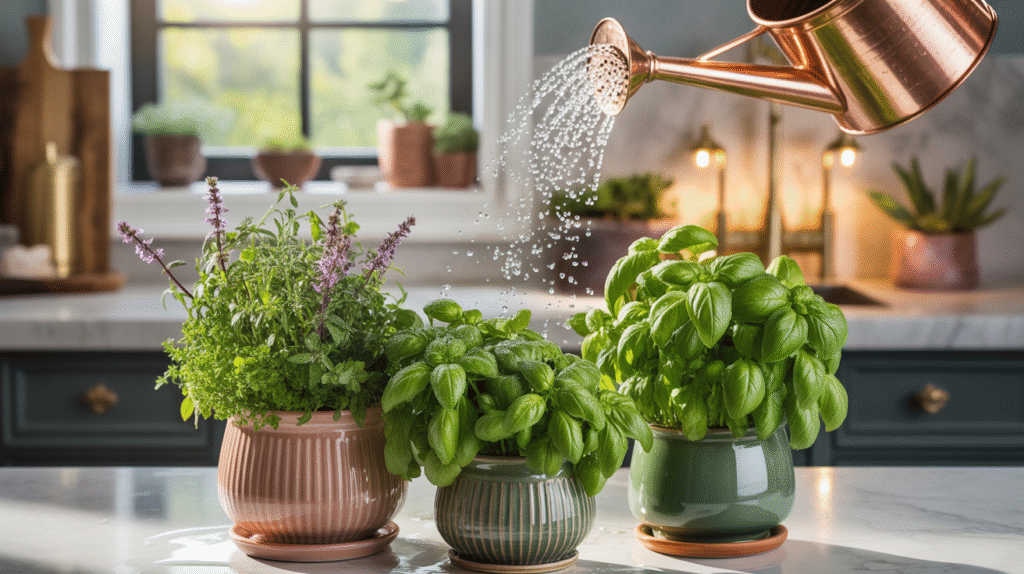
Different herbs may have slightly different needs: basil likes more frequent watering, while rosemary prefers drier soil. Observing your plants and adjusting watering frequency ensures that your indoor herb garden stays strong, lush, and long-lasting.
4 — Use the Right Soil Mix for Healthy Growth
Soil plays a major role in how well your indoor herbs grow. The ideal soil for herbs is light, well-draining, and enriched with organic matter. A high-quality potting mix designed for indoor plants helps keep moisture balanced while preventing the soil from becoming compacted. Using the right soil ensures your herbs stay healthy and strengthens your overall Essential Houseplant Care Tips routine.
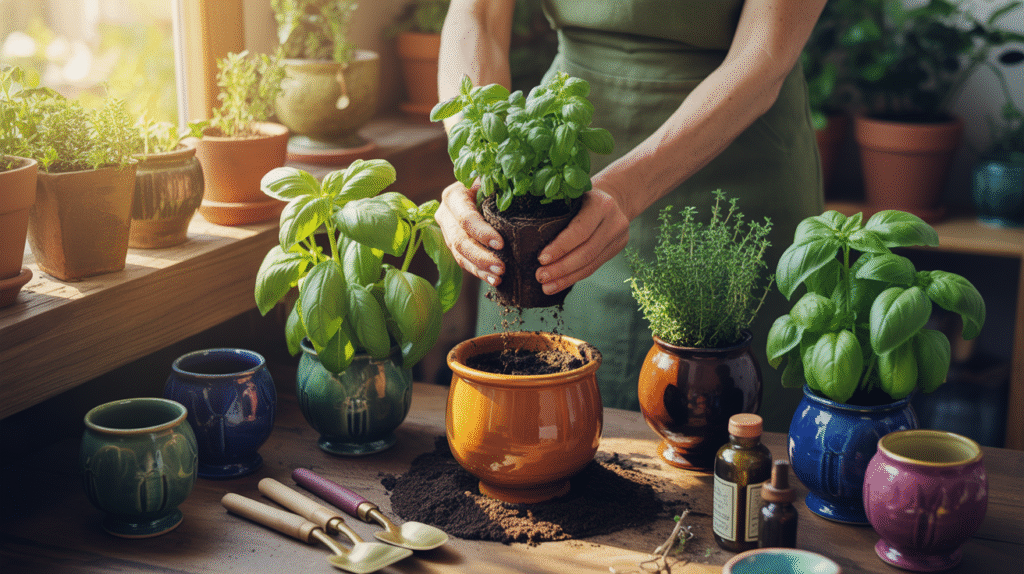
Indoor herbs thrive when their roots can breathe. Adding small amounts of perlite or coco coir boosts drainage and keeps the soil airy. This helps prevent waterlogging, reduces the risk of root rot, and supports strong, fast-growing roots. Healthy roots mean healthier, more flavorful herbs.
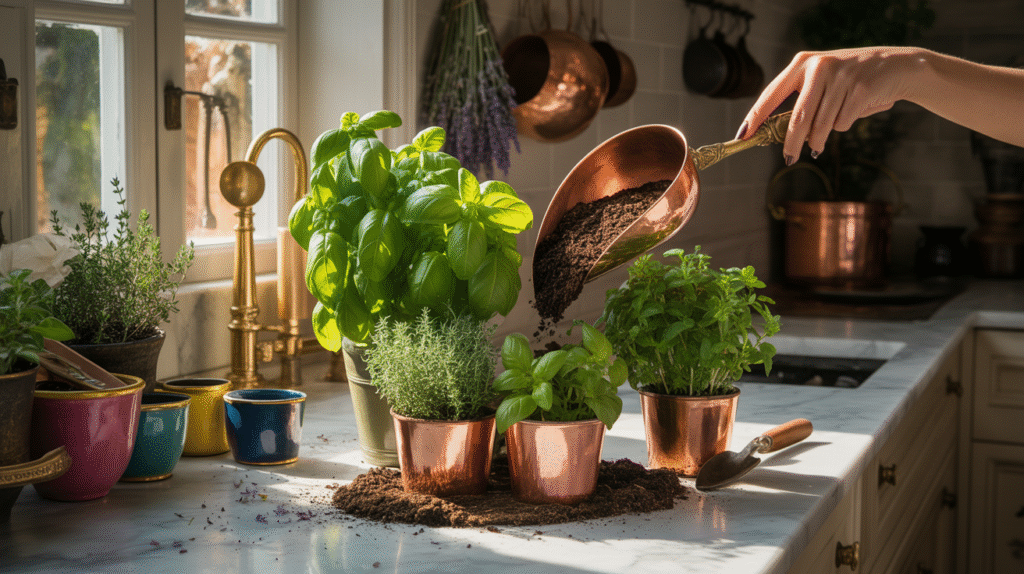
Choosing the right container also makes a difference. Terra cotta pots absorb excess moisture, while ceramic containers maintain more consistent hydration. Matching your soil mix to your pot style creates the perfect growing environment for your indoor herbs.
5 — Choose the Perfect Pots for Indoor Herb Growth
The type of pot you choose directly affects how well your indoor herbs grow. Containers with drainage holes are essential because herbs dislike sitting in excess water. Proper drainage prevents root rot and allows your plants to absorb oxygen efficiently, making this one of the most important Essential Houseplant Care Tips for beginners.
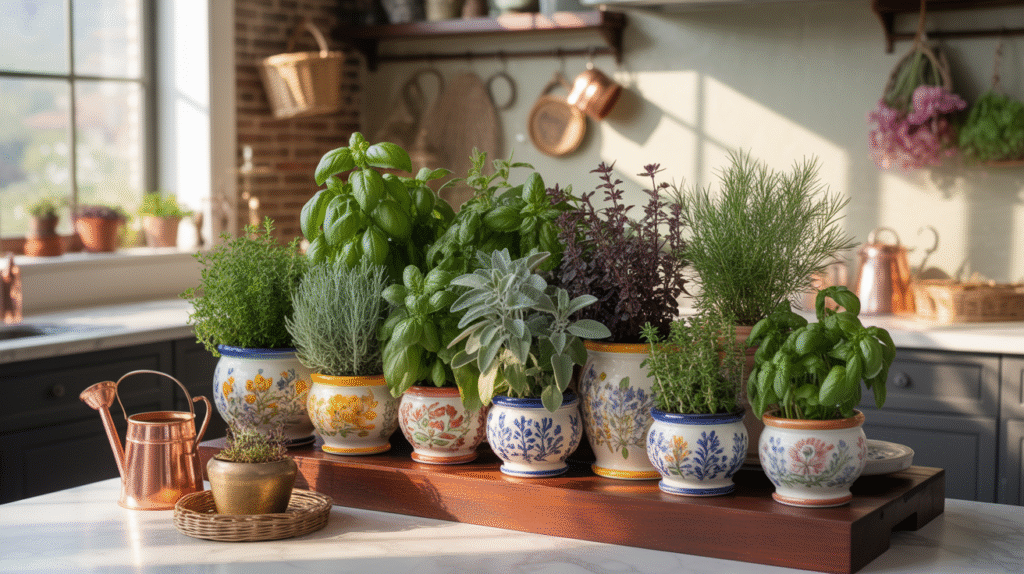
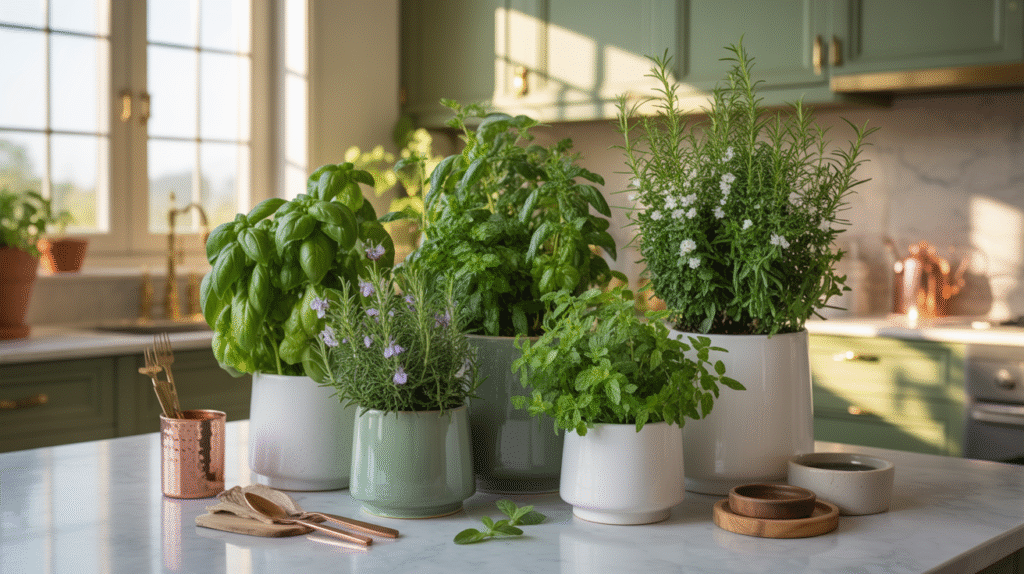
Different pot materials also influence moisture control. Terracotta pots absorb water and help soil dry faster—ideal for herbs like rosemary and thyme that prefer drier conditions. Ceramic pots retain moisture longer, which works well for basil, parsley, and mint. Choosing the right pot for each herb ensures long-term health and steady growth.
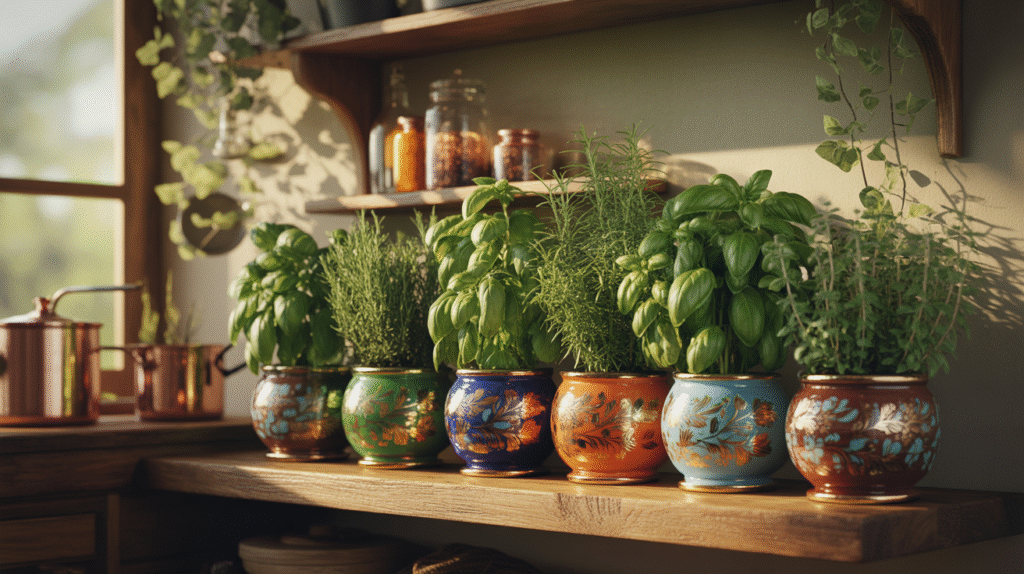
Size matters too. A small pot may restrict root development, while an overly large pot can trap unnecessary moisture. Selecting medium-sized pots gives your herbs enough room to grow without overwhelming their roots.
6 — Mastering Indoor Humidity for Healthy Herbs
Humidity plays a major role in how well your indoor herbs thrive, especially softer varieties like basil, cilantro, and parsley. Indoor air—particularly during winter—can become too dry, causing herbs to wilt, develop crispy edges, or stop growing. Maintaining the right humidity level is one of the most overlooked yet powerful Essential Houseplant Care Tips for anyone growing herbs indoors.
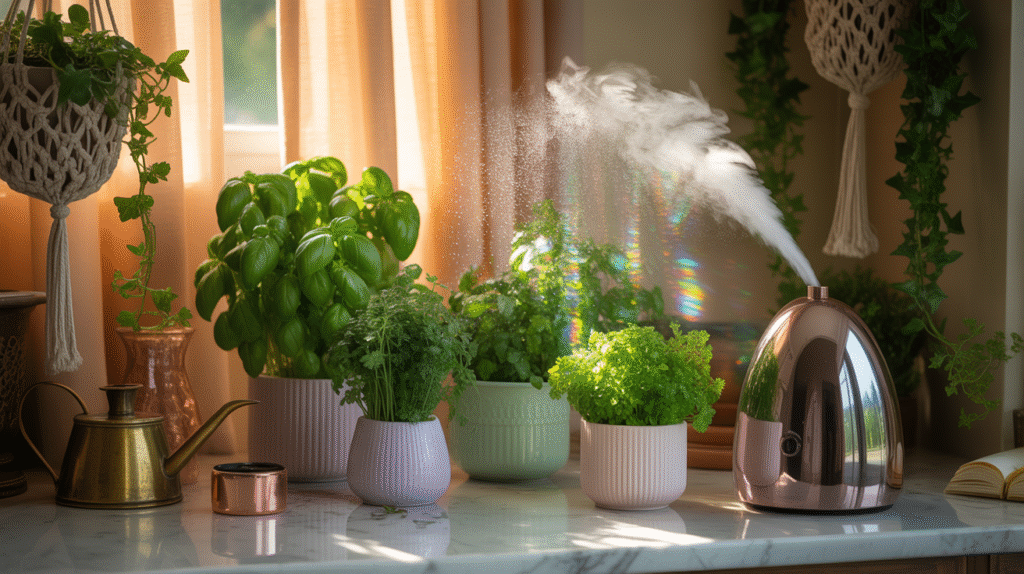
You can easily improve humidity around your plants through simple, natural methods. Grouping herbs together creates a mini-microclimate that keeps moisture in the air. Another effective method is placing pots on a pebble tray filled with water; as the water evaporates, it increases humidity around the plants without overwatering them. A small humidifier can also work wonders for more moisture-loving herbs.
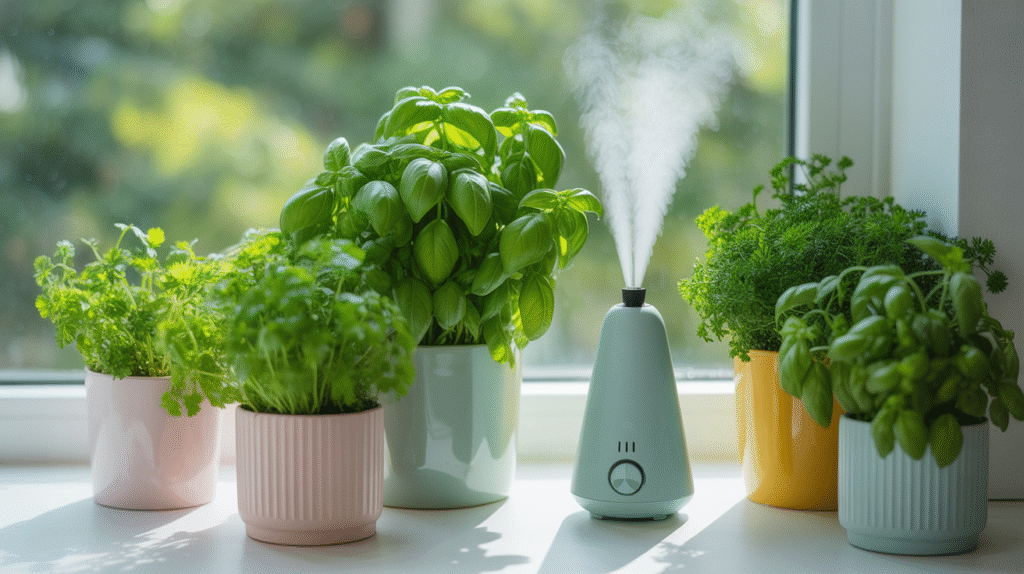
Balanced humidity not only boosts leaf growth but also keeps your herbs fragrant and flavorful. Plants that receive proper humidity show richer color, faster growth, and stronger aromas—ideal for anyone who loves cooking with fresh indoor herbs.
7 — Choosing the Best Pots & Containers for Indoor Herbs
The container you choose can make a major difference in how well your indoor herbs grow. Proper pots ensure good drainage, prevent root rot, and allow herbs to develop a strong root system. Selecting the right container is one of the smartest Essential Houseplant Care Tips for beginners because it directly affects the long-term health and productivity of your herbs.
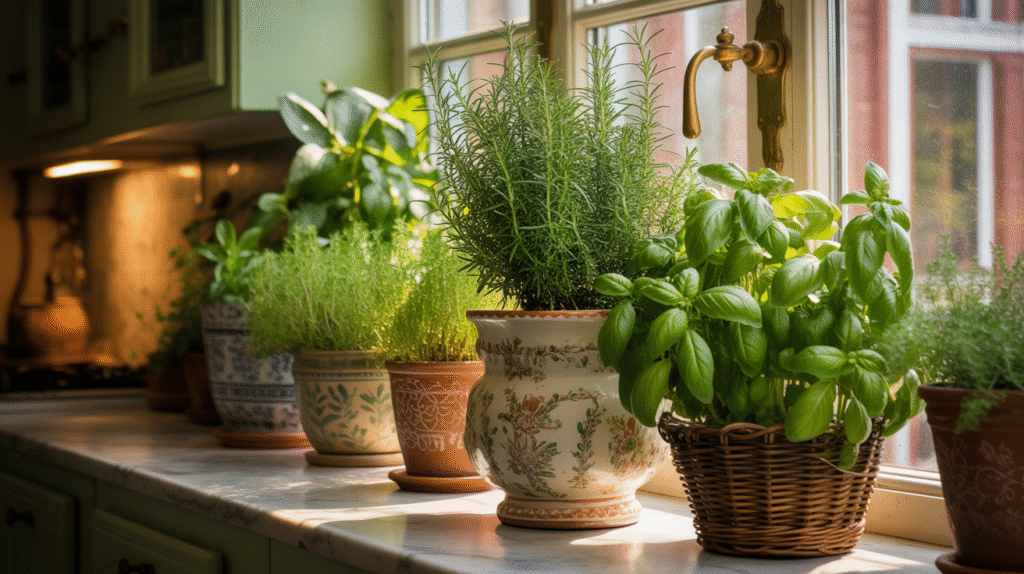
Terracotta pots are ideal for herbs like rosemary, thyme, and oregano because they allow the soil to breathe and dry out naturally. For moisture-loving herbs like mint and parsley, plastic or ceramic pots help retain water better. Always choose pots with drainage holes—this prevents water from pooling at the bottom and stops fungal issues before they start.
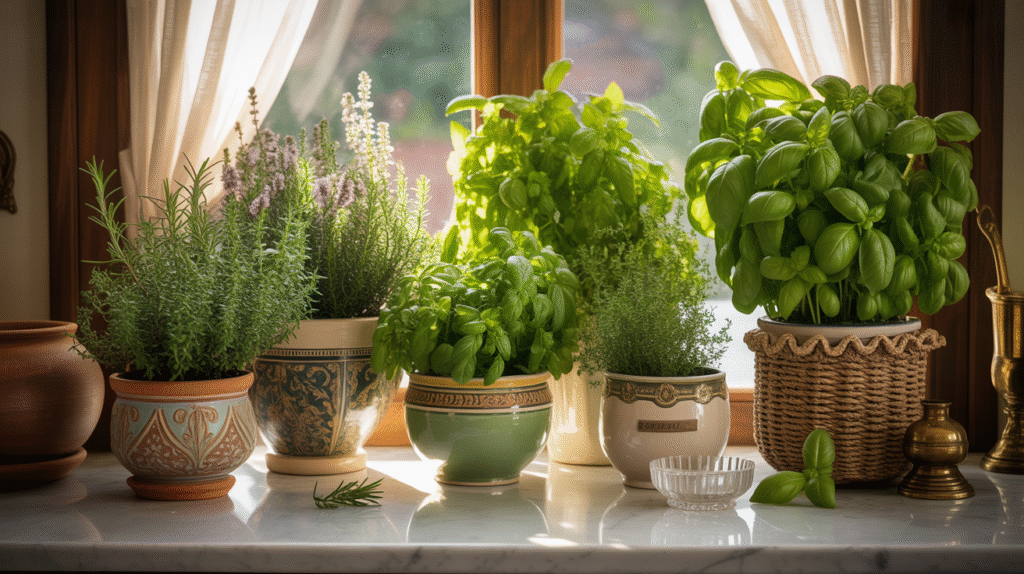
At the same time, choosing visually appealing pots adds beauty to your indoor space. Neutral tones, woven baskets, and modern ceramic designs can elevate your kitchen or windowsill while helping your herbs grow strong and healthy.
8 — Feed Indoor Herbs with the Right Nutrients
Indoor herbs need gentle feeding to stay productive and vibrant. Unlike outdoor plants, potted herbs rely entirely on you for nutrients. Using a balanced, diluted fertilizer every few weeks helps replenish essential nutrients without overwhelming the plant. Feeding correctly is one of the most effective Essential Houseplant Care Tips for maintaining lush growth and flavorful leaves.
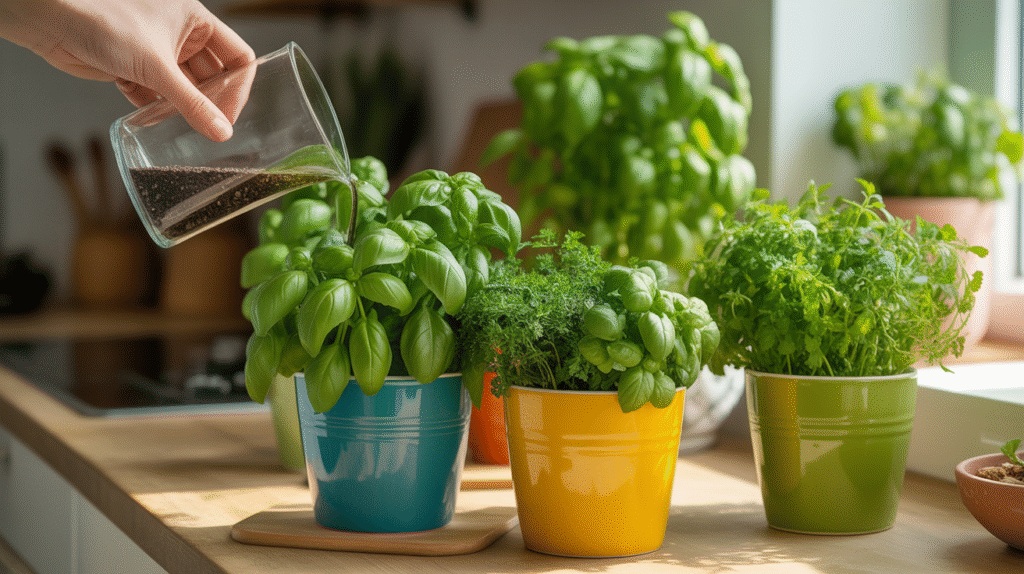
Liquid fertilizers work especially well for indoor herbs because they’re easy to control. Applying them during active growth periods encourages strong stems and rich foliage. Overfeeding, however, can cause weak growth or bitter-tasting herbs, so moderation is key.
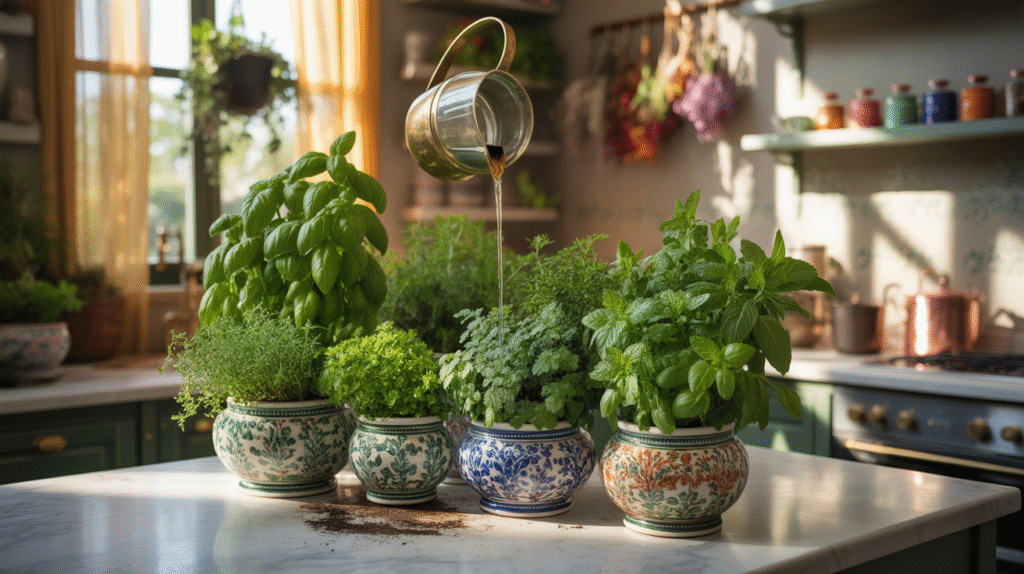
For a natural approach, organic compost tea or seaweed-based fertilizers provide slow, steady nourishment. These options support long-term health and help your indoor herbs stay fresh, green, and productive throughout the year.
9 — Regular Pruning for Bushy, Productive Herbs
Pruning is essential for keeping indoor herbs healthy and encouraging continuous growth. Regular trimming prevents herbs from becoming leggy and helps them develop a fuller, bushier shape. Snipping the top leaves also encourages new shoots, making this one of the most practical Essential Houseplant Care Tips for indoor herb gardeners.
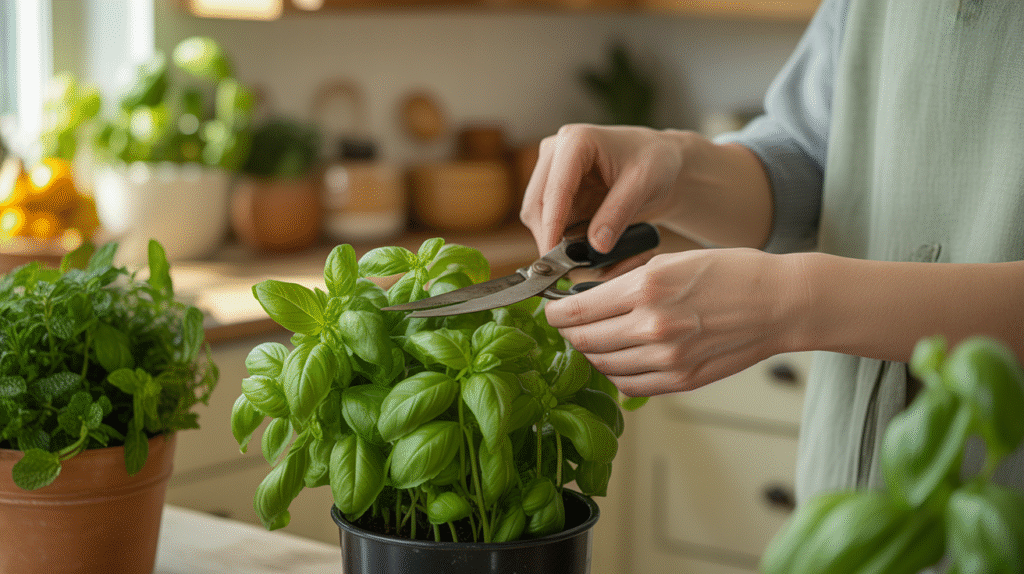
Harvesting herbs frequently not only improves plant shape but also boosts flavor. When you remove older leaves, the plant redirects energy toward fresh growth. Using clean scissors or pruning shears ensures clean cuts that heal quickly, keeping your herbs strong and disease-free.
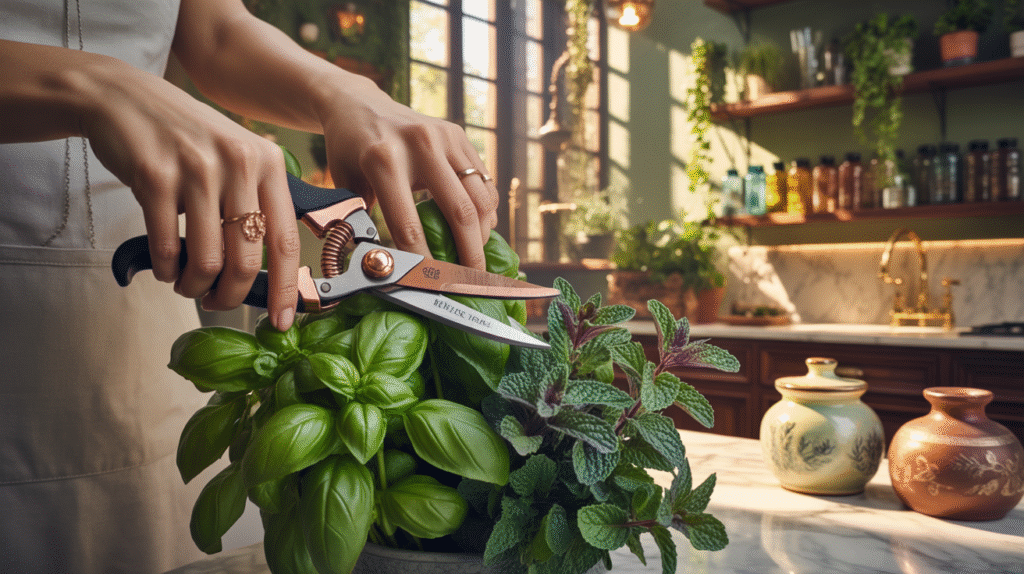
Even flowering herbs benefit from pruning. Removing early flower buds allows the plant to focus on leaf production rather than seeds, extending the life of your indoor herbs and keeping them productive longer.
10 — Protect Indoor Herbs from Pests & Stress
Even indoor herbs can occasionally attract pests like aphids or fungus gnats. Regularly inspecting your plants helps you catch issues early before they spread. Keeping leaves clean and removing damaged growth is one of the most effective Essential Houseplant Care Tips for maintaining healthy indoor herbs.
Natural solutions work best indoors. Neem oil sprays, mild soap solutions, or wiping leaves with a damp cloth can safely remove pests without harming your herbs. Proper airflow and avoiding overwatering also reduce pest problems and keep your plants stress-free.
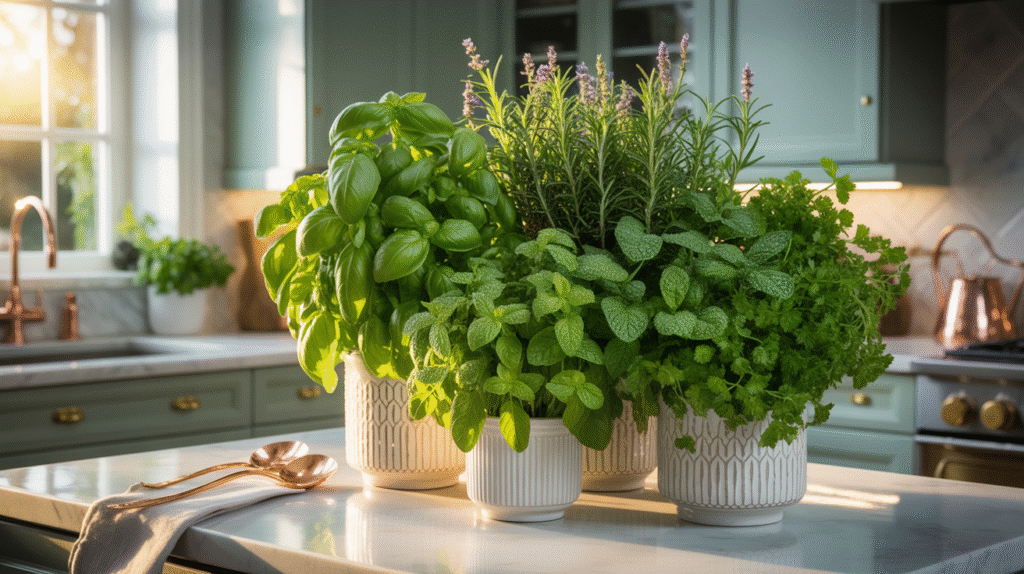
Healthy herbs are naturally more resistant to pests. When your plants receive the right light, water, and care, they grow stronger and recover faster from minor issues—ensuring a thriving indoor herb garden year-round.
Final Thoughts
Growing herbs indoors doesn’t have to be complicated. By focusing on proper watering, balanced light exposure, healthy soil, and consistent care, you can enjoy fresh, flavorful herbs right from your kitchen all year long. These simple yet effective Essential Houseplant Care Tips help prevent common problems and make indoor herb gardening both enjoyable and rewarding—even for beginners.
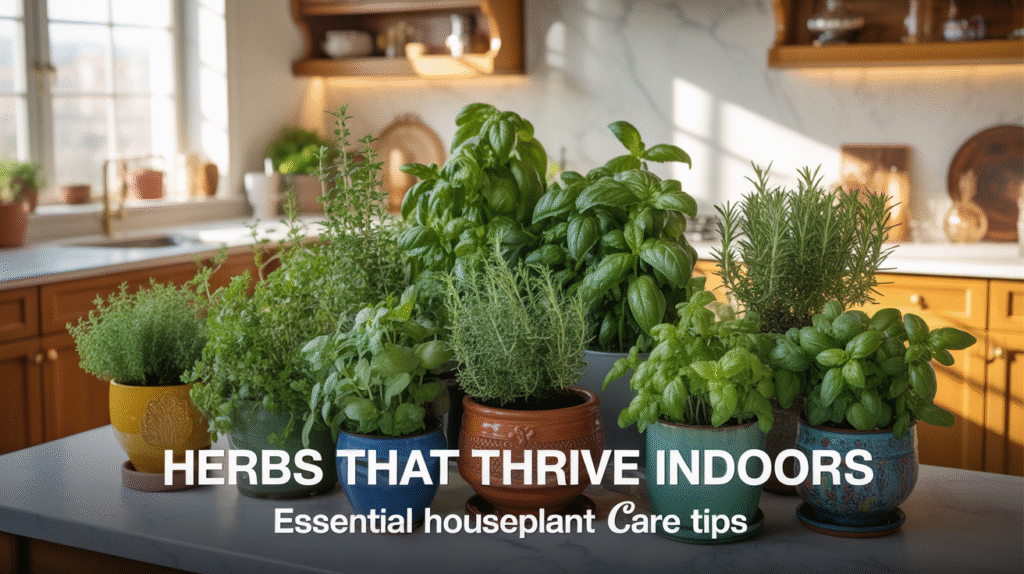
The key to success is observation and consistency. Paying attention to your herbs’ leaves, soil moisture, and growth patterns allows you to adjust care before issues arise. With regular pruning, correct pot selection, and a supportive indoor environment, your herbs will grow stronger, greener, and more productive over time.
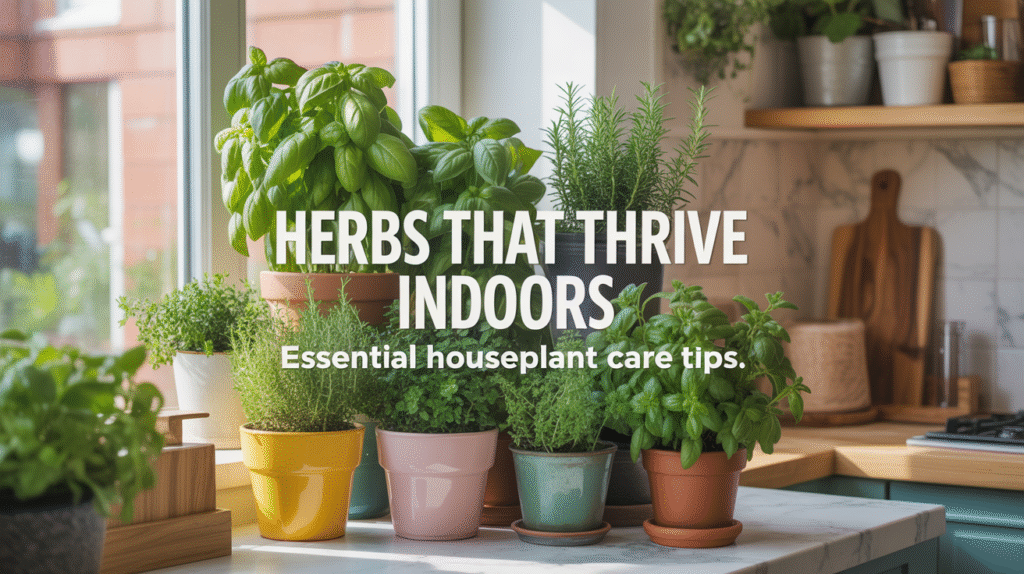
Whether you’re growing herbs for cooking, wellness, or home décor, applying these Essential Houseplant Care Tips will help you create a thriving indoor garden that adds beauty, freshness, and natural charm to your space every day.